


Connexin channels and hemichannels are modulated differently by charge reversal at residues forming the intracellular pocket (Tomás Pérez-Acle, PhD)
Felipe Villanelo, Peter J. Minogue, Jaime Maripillán, Mauricio Reyna-Jeldes, Joaquin Jensen-Flores, Isaac E. García, Eric C. Beyer, Tomás Pérez-Acle, Viviana M. Berthoud & Agustín D. Martínez
Background
Members of the β-subfamily of connexins contain an intracellular pocket surrounded by amino acid residues from the four transmembrane helices. The presence of this pocket has not previously been investigated in members of the α-, γ-, δ-, and ε-subfamilies. We studied connexin50 (Cx50) as a representative of the α-subfamily, because its structure has been determined and mutations of Cx50 are among the most common genetic causes of congenital cataracts.
Methods
To investigate the presence and function of the intracellular pocket in Cx50 we used molecular dynamics simulation, site-directed mutagenesis, gap junction tracer intercellular transfer, and hemichannel activity detected by electrophysiology and by permeation of charged molecules.
Results
Employing molecular dynamics, we determined the presence of the intracellular pocket in Cx50 hemichannels and identified the amino acids participating in its formation. We utilized site-directed mutagenesis to alter a salt-bridge interaction that supports the intracellular pocket and occurs between two residues highly conserved in the connexin family, R33 and E162. Substitution of opposite charges at either position decreased formation of gap junctional plaques and cell–cell communication and modestly reduced hemichannel currents. Simultaneous charge reversal at these positions produced plaque-forming non-functional gap junction channels with highly active hemichannels.
Conclusions
These results show that interactions within the intracellular pocket influence both gap junction channel and hemichannel functions. Disruption of these interactions may be responsible for diseases associated with mutations at these positions.
https://biolres.biomedcentral.com/articles/10.1186/s40659-024-00501-5

Preclinical evaluation of chimeric antigen receptor T cells targeting the carcinoembryonic antigen as a potential immunotherapy for gallbladder cancer OncoImmunology (Álvaro Lladser, PhD)
Ernesto Lopez, Sofía Hidalgo, Eduardo Roa,Javiera Gómez, Carlos Hermansen Truan,Evy Sanders, Cristian Carrasco, Rodrigo Pacheco, Flavio Salazar-Onfray, Manuel Varas-Godoy, Vincenzo Borgna, Alvaro Lladser
ABSTRACT
Gallbladder cancer (GBC) is commonly diagnosed at late stages when conventional treatments achieve only modest clinical benefit. Therefore, effective treatments for advanced GBC are needed. In this context, the administration of T cells genetically engineered with chimeric antigen receptors (CAR) has shown remarkable results in hematological cancers and is being extensively studied for solid tumors. Interestingly, GBC tumors express canonical tumor-associated antigens, including the carcinoembryonic antigen (CEA). However, the potential of CEA as a relevant antigen in GBC to be targeted by CAR-T cell-based immunotherapy has not been addressed. Here we show that CEA was expressed in 88% of GBC tumors, with higher levels associated with advanced disease stages. CAR-T cells specifically recognized plate-bound CEA as evidenced by up-regulation of 4-1BB, CD69 and PD−1, and production of effector cytokines IFN-γ and TNF-α. In addition, CD8+ CAR-T cells up-regulated the cytotoxic molecules granzyme B and perforin. Interestingly, CAR-T cell activation occurred even in the presence of PD-L1. Consistent with these results, CAR-T cells efficiently recognized GBC cell lines expressing CEA and PD-L1, but not a CEA-negative cell line. Furthermore, CAR-T cells exhibited in vitro cytotoxicity and reduced in vivo tumor growth of GB-d1 cells. In summary, we demonstrate that CEA represents a relevant antigen for GBC that can be targeted by CAR-T cells at the preclinical level. This study warrants further development of the adoptive transfer of CEA-specific CAR-T cells as a potential immunotherapy for GBC.
https://www.tandfonline.com/doi/full/10.1080/2162402X.2023.2225291
PDF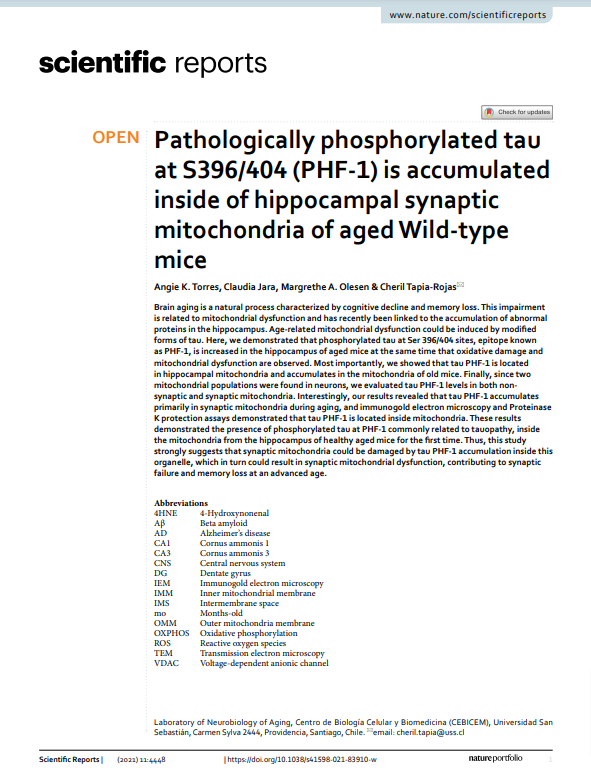
Pathologically phosphorylated tau at S396/404 (PHF‐1) is accumulated inside of hippocampal synaptic mitochondria of aged Wild‐type mice (Cheril Tapia)
PDF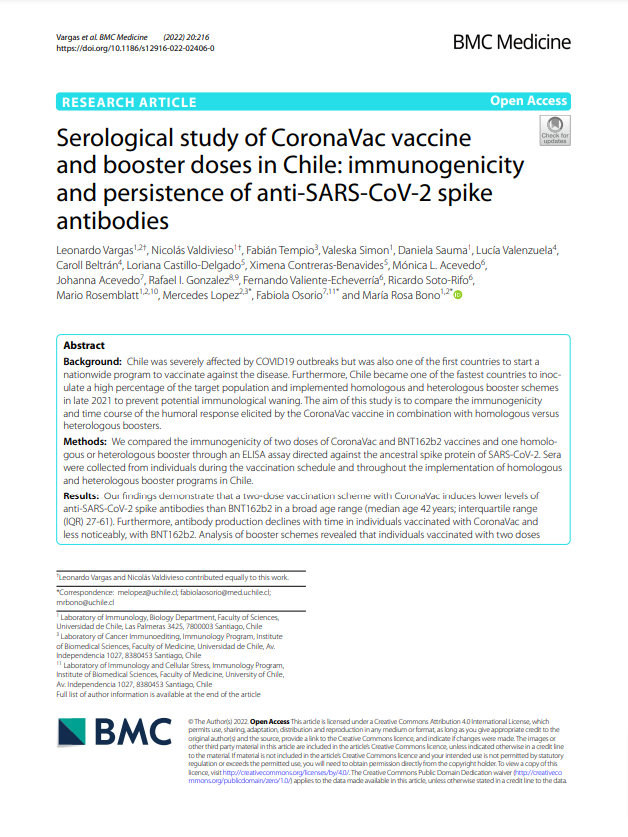
Serological study of CoronaVac vaccine and booster doses in Chile: immunogenicity and persistence of anti-SARS-CoV-2 spike antibodies
PDF Cell Differentiation and Pathology (Enrique Brandan)
PDF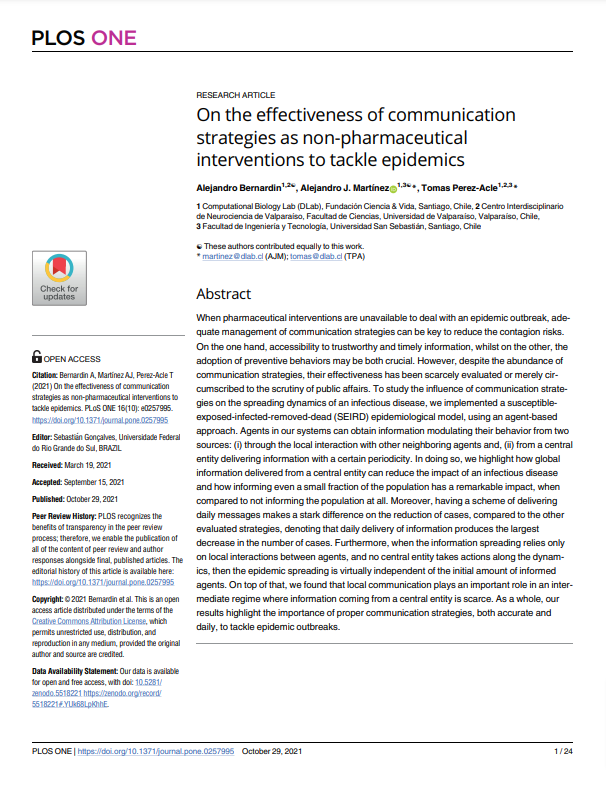
Computational Biology (Tomás Pérez-Acle, PhD)
PDF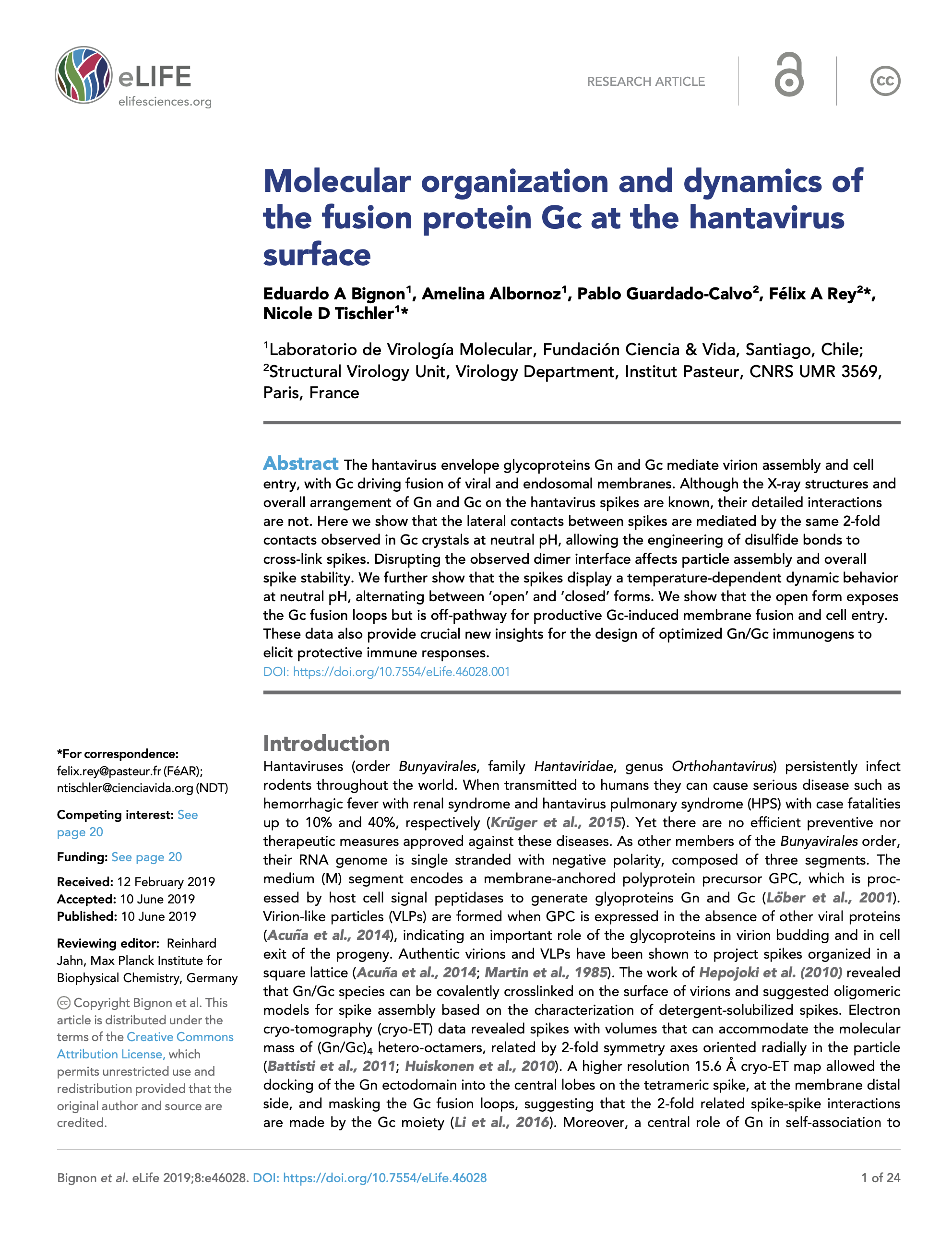
Molecular Virology (Nicole Tischler, PhD)
Bignon EA, Albornoz A, Guardado-Calvo P, Rey FA, Tischler ND (2019). Molecular organization and dynamics of the fusion protein Gc at the hantavirus surface. eLife 8. pii: e46028. doi: 10.7554/eLife.46028.
Cellular and Molecular Immunology (Mario Rosemblatt, PhD)
Y. Hidalgo, S. Núñez, M.J. Fuenzalida, F. Flores-Santibáñez, P.J. Sáez, J. Dorner, A.M. Lennon-Dumenil, V. Martínez, E. Zorn, M. Rosemblatt, D. Sauma and M.R. Bono. Thymic B cells promote germinal center-like structures and the expansion of follicular helper T cells in lupus-prone mice. Frontiers Immunology, Vol. 11, Article 696, April 2020. doi: 10.3389/fimmu.2020.00696
Microbial Ecophysiology (Raquel Quatrini, PhD)
Moya-Beltrán A., Rojas-Villalobos C., Díaz M., Guiliani N., Quatrini R., Castro M. Nucleotide second messenger-based signaling in extreme acidophiles of the Acidithiobacillus species complex: partition between the core and variable gene complements. Front. Microbiol. 10: 381. DOI:10.3389/fmicb.2019.00381 (2019)
In this publication we address the challenge of disentangling the nucleotide-driven signal transduction pathways in the acidophilic bacterial genus Acidithiobacillus, using pangenome-based comparative genomic strategies. Molecular elements of c-di-GMP metabolism and transduction were mostly found scattered along the flexible genome of the acidithiobacilli, allowing the identification of probable control modules that could be critical for substrate colonization, biofilm development and intercellular interactions. Findings presented open new ways to explore molecular circuits to control biomining microorganism behaviours.
PDF
Neuroimmunology (Rodrigo Pacheco, PhD)
Ugalde V., Contreras F., Prado C., Chovar O., Espinoza A., Pacheco R. Dopaminergic signalling limits suppressive activity and gut homing of regulatory T cells upon intestinal inflammation. Mucosal Immunol. In press. doi: 10.1038/s41385-020-00354-7 (2020).
Here we provide genetic and pharmacologic evidence indicating how dopaminergic signalling impairs the suppressive activity and the recruitment of Treg into the gut mucosa upon intestinal inflammation.
PDF
Biology of Neurodegeneration (María Soledad Matus Montero, PhD)
Falcón P, Escandón M, Brito Á, Matus S. Nutrient Sensing and Redox Balance: GCN2 as a New Integrator in Aging. Oxid Med Cell Longev. 2019 May 22;2019:5730532. doi: 10.1155/2019/5730532.
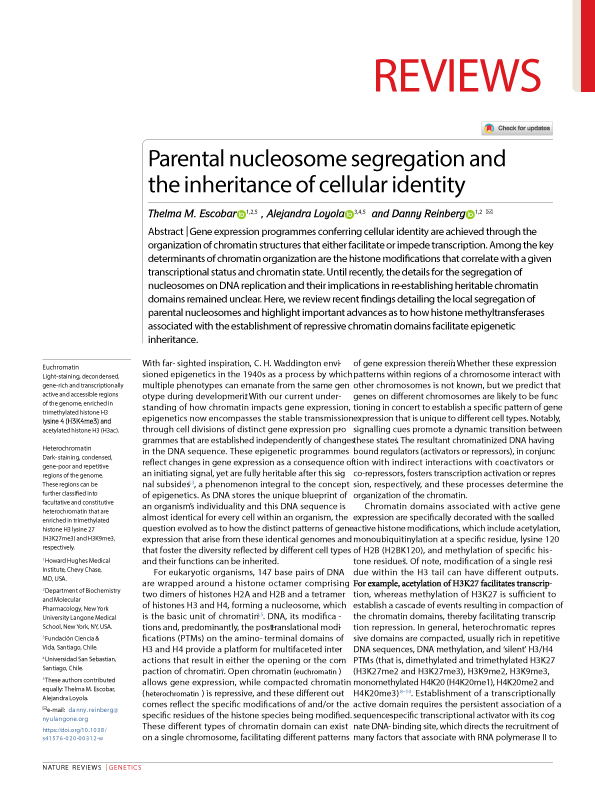
Epigenetics and Chromatin (Alejandra Loyola, PhD)
*Escobar T., *Loyola A. and Reinberg D. “Parental nucleosome segregation and the inheritance of cellular identity”. (2021) Nature Reviews Genetics. https://doi.org/10.1038/s41576-020-00312-w. *equal contribution
The article is a review of recent findings detailing local segregation of parental nucleosomes during DNA replication.
PDF
Immunoncology (Álvaro Lladser, PhD)
Menares E, Gálvez-Cancino F, Cáceres-Morgado P, Ghorani E, López E, Díaz X, Saavedra-Almarza J, Figueroa DA, Roa E, Quezada SA, Lladser A. Resident memory CD8+ T cells amplify anti-tumor immunity by triggering antigen spreading through dendritic cells. Nature Communications. 10(1):4401. doi: 10.1038/s41467-019-12319-x (2019).
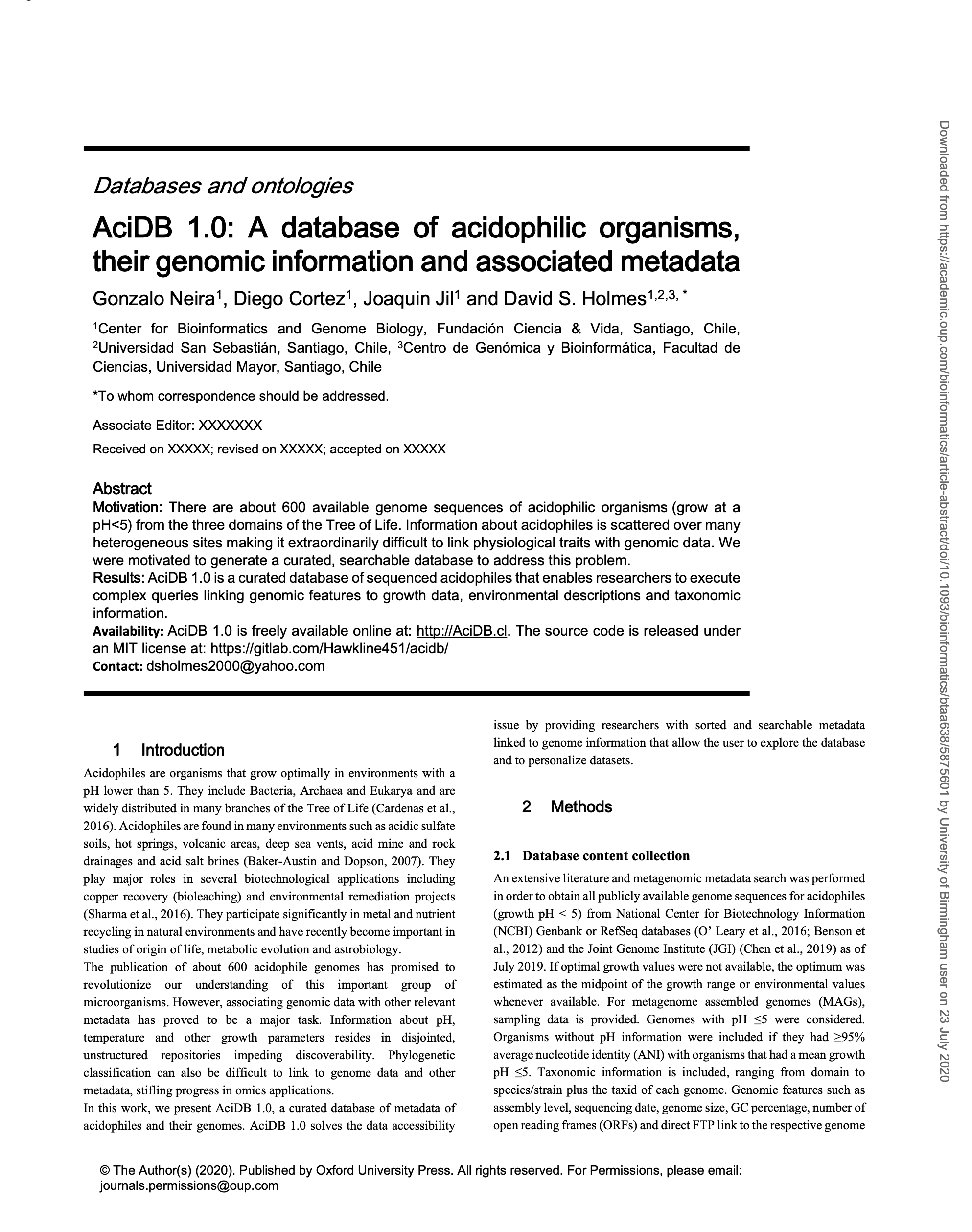
Bioinformatics and Genome Biology (David S. Holmes)
Neira, G., Cortez, D., Jil, J., Holmes, D. S. AciDB 1.0: A database of acidophilic organisms, their genomic information and associated metadata. Bioinformatics (Oxford, England) DOI: 10.1093/bioinformatics/btaa638 (2020).
A searchable database has been constructed of over 500 high-quality genomes of acidophilic Bacteria and Archaea.
PDF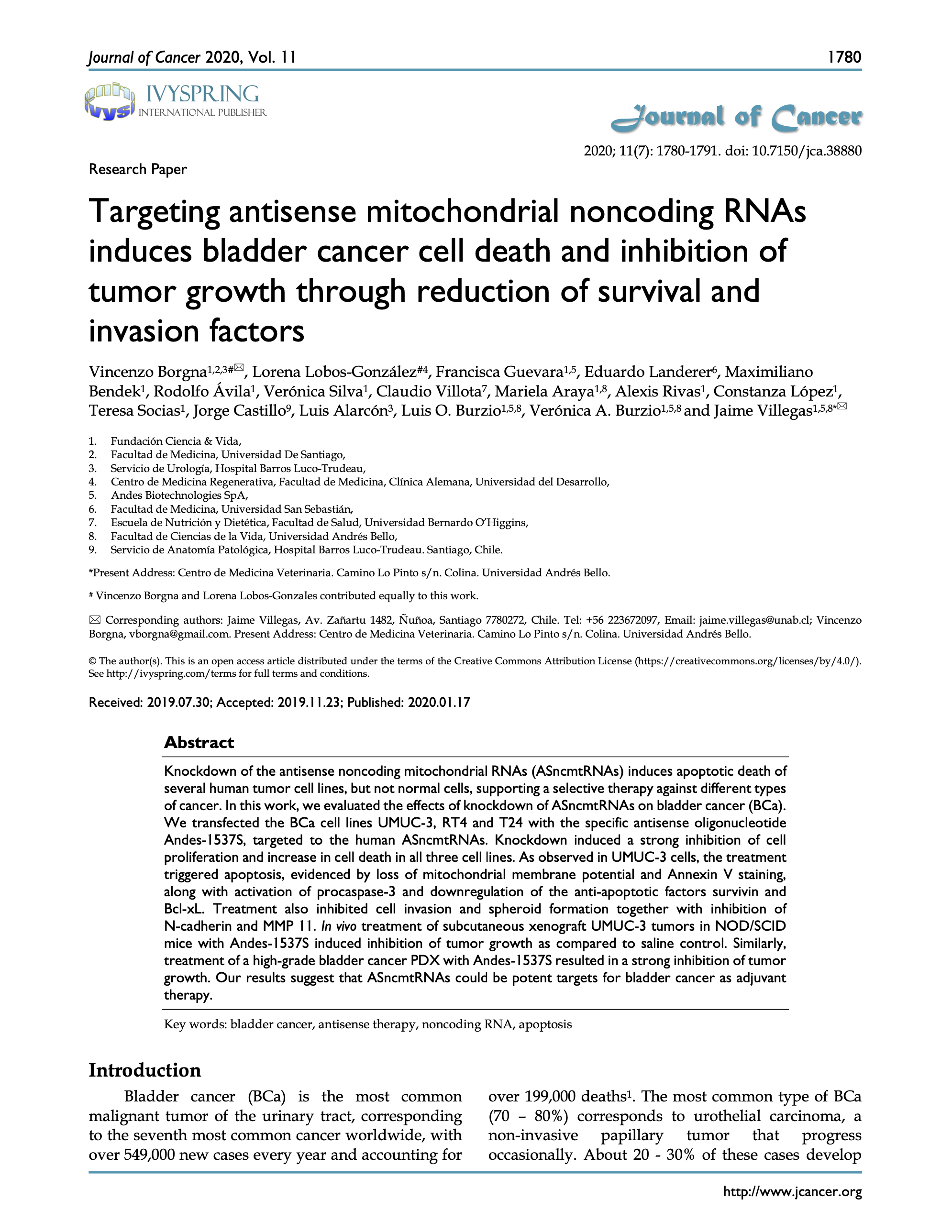
Non-coding RNAs & Cancer (Luis O. Burzio, PhD)
Borgna, V., Lobos-González, L., Guevara, F., Landerer, E., Bendek, M., Ávila, R., Silva, V., Villota, C., Araya, M., Rivas, A., López, C., Socias, T., Castillo, J., Alarcón, L., Burzio, L. O., Burzio, V. A., & Villegas, J. (2020). Targeting antisense mitochondrial noncoding RNAs induces bladder cancer cell death and inhibition of tumor growth through reduction of survival and invasion factors. Journal of Cancer, 11(7), 1780–1791. https://doi.org/10.7150/jca.38880
In vivo knockdown of ASncmtRNA induces apoptosis and tumor growth inhibition in xenograft and PDX murine models of bladder cancer.
PDF